SecOps | Compliance | Risk Intelligence
Detection Alone Cannot Secure Your Enterprise.
Legacy security tools flag anomalies while compliance dashboards monitor policies, but both lack crucial architectural awareness. Our platform bridges this gap using dynamic mapping, turning fragmented alerts into comprehensive threat intelligence for automated, proactive defence.
CORE FEATURES
Architected for Contextual Risk Intelligence and Continuous Regulatory Adherence.
Equip your enterprise with advanced mechanisms. These tools transition your posture from reactive monitoring to proactive resilience.

Dynamic Topology Mapping
Discovers hidden IT assets continuously, providing operations teams an accurate, unified perspective of all digital infrastructure without relying on outdated manual registries.
Contextual Impact Analysis
Traces relationships between applications and underlying services so security teams understand the exact scope of a threat rather than guessing its severity.
Continuous Policy Validation
Replaces manual, periodic compliance checks with automated, constant monitoring that ensures configurations remain aligned with industry standards and internal security governance protocols.
Intelligent Automated Response
Triggers governed, AI-driven workflows to remediate vulnerabilities swiftly, ensuring consistent execution across diverse systems while keeping human analysts firmly in control.
Cloud Migration Intelligence
Sequences cloud migration waves from observed dependency data. Prevents cascade failures from undiscovered cross-system connections.
Intelligent Twin
Simulates the impact of any planned change in a digital twin before it runs in production. The blast-radius check that prevents go-live incidents.
Legacy Code Conversion
Converts legacy code in the optimal sequence determined by the dependency map. Context-aware conversion that understands what the code does, not just what it says.
Knowledge Graph (shared layer)
A continuously-observed model of every application, dependency, business service, and cost line in your estate. Every pillar reads from it. Every action writes back to it.
HOW IT WORKS
Discover Assets. Assess Impact.
Enforce Policies.
Automate Defence.
Navigating modern security requires continuous visibility and action. This framework integrates discovery, context, and remediation seamlessly.
Automatically map infrastructure assets across hybrid and multi-cloud environments
The platform continuously identifies servers, containers, and applications dynamically. Eliminating manual configuration databases ensures your operational topology stays completely accurate, removing dangerous blind spots that traditional scanning tools frequently miss entirely.
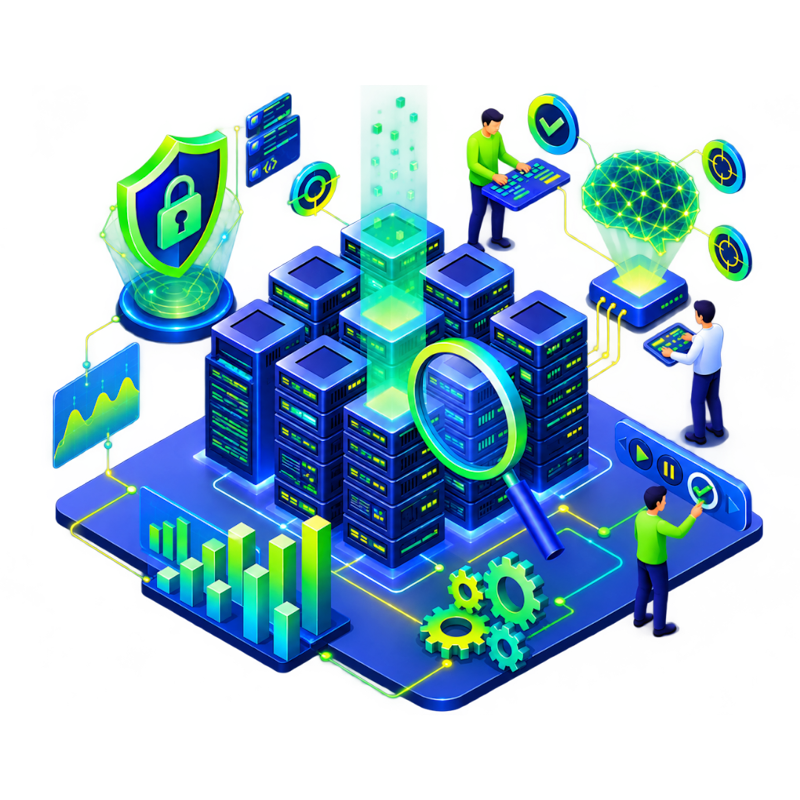
Evaluate flagged vulnerabilities against interconnected architectural dependencies
By feeding telemetry into a Live Enterprise Knowledge Graph, isolated security warnings gain profound meaning. Analysts can instantly visualize how specific threats cascade across related services, ensuring critical business impacts are handled first.
Validate regulatory adherence continuously rather than relying on periodic audits.
Transform policy management from a reactive chore into a constant baseline state. The system monitors environmental changes constantly, proactively aligning configurations with established regulatory frameworks to drastically reduce audit efforts and exposure risks.
Execute policy-driven automated remediations utilizing secure AI response workflows.
Moving far beyond basic alerting, the platform launches intelligent countermeasures instantly. Governed workflows guarantee that defensive actions remain transparent and auditable, neutralizing verified threats rapidly while maintaining strict human oversight and system stability.
Automatically map infrastructure assets across hybrid and multi-cloud environments
The platform continuously identifies servers, containers, and applications dynamically. Eliminating manual configuration databases ensures your operational topology stays completely accurate, removing dangerous blind spots that traditional scanning tools frequently miss entirely.
Automatically map infrastructure assets across hybrid and multi-cloud environments
The platform continuously identifies servers, containers, and applications dynamically. Eliminating manual configuration databases ensures your operational topology stays completely accurate, removing dangerous blind spots that traditional scanning tools frequently miss entirely.
Evaluate flagged vulnerabilities against interconnected architectural dependencies
By feeding telemetry into a Live Enterprise Knowledge Graph, isolated security warnings gain profound meaning. Analysts can instantly visualize how specific threats cascade across related services, ensuring critical business impacts are handled first.
Evaluate flagged vulnerabilities against interconnected architectural dependencies
By feeding telemetry into a Live Enterprise Knowledge Graph, isolated security warnings gain profound meaning. Analysts can instantly visualize how specific threats cascade across related services, ensuring critical business impacts are handled first.
Validate regulatory adherence continuously rather than relying on periodic audits.
Transform policy management from a reactive chore into a constant baseline state. The system monitors environmental changes constantly, proactively aligning configurations with established regulatory frameworks to drastically reduce audit efforts and exposure risks.
Validate regulatory adherence continuously rather than relying on periodic audits.
Transform policy management from a reactive chore into a constant baseline state. The system monitors environmental changes constantly, proactively aligning configurations with established regulatory frameworks to drastically reduce audit efforts and exposure risks.
Execute policy-driven automated remediations utilizing secure AI response workflows.
Moving far beyond basic alerting, the platform launches intelligent countermeasures instantly. Governed workflows guarantee that defensive actions remain transparent and auditable, neutralizing verified threats rapidly while maintaining strict human oversight and system stability.
Execute policy-driven automated remediations utilizing secure AI response workflows.
Moving far beyond basic alerting, the platform launches intelligent countermeasures instantly. Governed workflows guarantee that defensive actions remain transparent and auditable, neutralizing verified threats rapidly while maintaining strict human oversight and system stability.
Challenges
The Hidden Vulnerabilities of
Reactive Security.
Disconnected Operational Tools
Monitoring, incident management, and security tools often operate in silos without a unified system map. This leaves no room for an unified view of the business.
Incomplete Infrastructure Visibility
Traditional discovery tools struggle to detect modern environments like containers, microservices, and dynamic cloud infrastructure.

Outdated System Maps
Manual configuration management database (CMDB) updates quickly become inaccurate as systems change, leading to unreliable operational insights.
Ineffective Static Registries
Legacy configuration databases and manual mapping exercises rapidly become obsolete within dynamic cloud environments, rendering any extracted operational intelligence dangerously inaccurate during actual emergencies.
A GLIMPSE ON THE NUMBERS
Minimize Exposure. Maintain Compliance. Automate Threat Resolution Confidently.
Transform operational data into a definitive strategic advantage across all departments. Enable your engineering and leadership teams to protect critical workflows with unwavering confidence.
0
%
reduction in MTTR & time-to-diagnose
~
0
%
reduction in operational costs
20-
0
%
legacy application rationalization
0
%
Uptime
Continuous testing. Continuous learning. Continuous value.

Join leading enterprises
driving the loop forward.

Integration
Works With Your
Existing Enterprise Stack.
QyrusAI Modernize connects to your existing tools — CMDBs, ITSM platforms, cloud providers, and enterprise architecture repositories — so discovery enriches the tools you already use rather than replacing them.






CUSTOMER TESTIMONIALS
Enterprises running the loop
in their own words.
Real Teams. Real Outcomes. Real Confidence in what ships next.
Lorem Ipsum Dolor Sit Amet. Lorem Ipsum Dolor Sit Amet. Lorem
Qyrus not only supports the testing of our Web, Mobile, and API components as part of our CI/CD processes, but also in ongoing regression-testing across our partner ecosystem. The real power of Qyrus is that we have this extremely broad testing capability in one tool, run in the cloud, and reusable across all our development teams.
Shawbrook Bank
The transition to Qyrus has marked a significant turning point for us. By embracing automation, we not only streamlined our SAP test automation process but also achieved a remarkable reduction in overall project testing time by 40%.
Subaru

… the Qyrus platform have been a great addition to Monument's product delivery capabilities. Within a few months, we have been able to create a comprehensive test suite of complex end-to-end test scenarios spanning multiple platforms and channels. The Quinnox team has helped us embed the Qyrus solution, and the supporting processes around it, into our agile delivery methodology.
Monument
Resources
Expand your knowledge base continuously. Access strategic insights to fortify your digital environment.
Blog
 August 19, 2026 |
  18 min
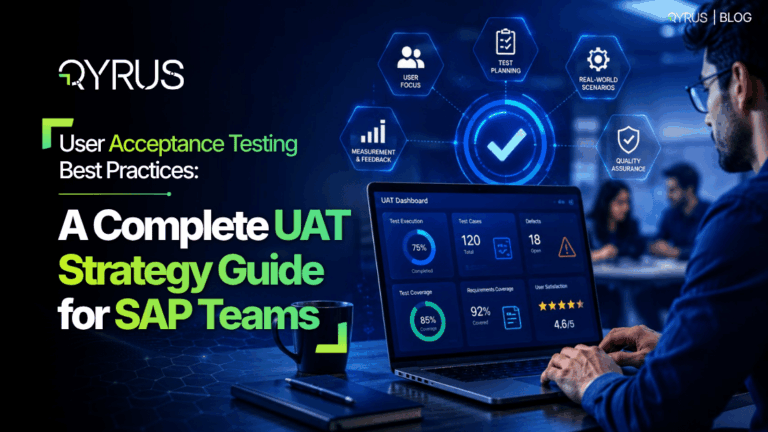
User Acceptance Testing Best Practices: A Complete UAT Strategy Guide for SAP Teams

August 6, 2026 | 14 min
SAP UAT Test Cases: Templates, Examples & Design Best Practices
July 27, 2026 | 10 min
SAP IBP Testing: A Practical Guide for QA and Planning Teams
Read More
Load More 

Case Study
September 17, 2025 | 5 min
From Bottlenecks to Breakthroughs: A Coca-Cola Bottler’s Quality Transformation
Read More
Food and Beverages
June 27, 2025 | 5 min
AI-Powered Testing Transforms One of the Largest Beverage Companies
Read More
BFSI
June 20, 2025 | 8 min
150% Efficiency Boost for Banking Client Using Device Farm
July 13, 2026 | 1 min
Meet Qyrus at the BFSI Innovation & Technology Summit India 2026

April 6, 2026 | 3 min
Qyrus at QonfX Bangalore: AI Testing, Context Engineering & QA Innovation

March 23, 2026 | 3 min
STAREAST 2026: Joining the Quality Engineering Conversation in Orlando
August 13, 2026 | 2 min
Qyrus Named in Gartner’s Market Overview for API and MCP Testing Tools
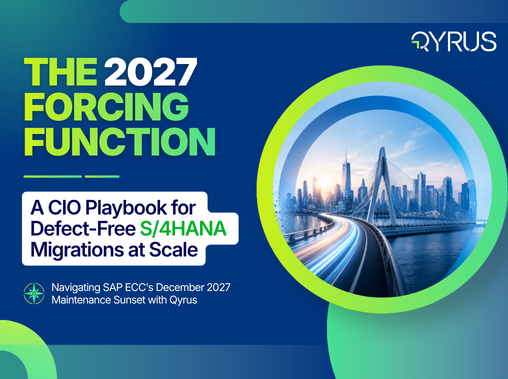
August 12, 2026 | 2 min
Modernize SAP Before 2027 Without Letting Defects Reach Go-Live
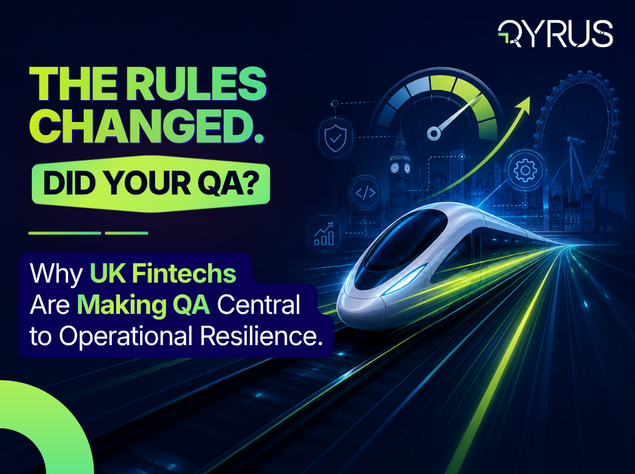
June 29, 2026 | 3 min
Why UK Fintechs Are Making QA Central to Operational Resilience.
August 13, 2026 | 2 min
Qyrus Named in Gartner’s Market Overview for API and MCP Testing Tools
August 12, 2026 | 2 min
Modernize SAP Before 2027 Without Letting Defects Reach Go-Live
June 29, 2026 | 3 min
Why UK Fintechs Are Making QA Central to Operational Resilience.
Blog
August 19, 2026 | 18 min
User Acceptance Testing Best Practices: A Complete UAT Strategy Guide for SAP Teams
August 6, 2026 | 14 min
SAP UAT Test Cases: Templates, Examples & Design Best Practices
July 27, 2026 | 10 min
SAP IBP Testing: A Practical Guide for QA and Planning Teams
Case Study
Case Study
September 17, 2025 | 5 min
From Bottlenecks to Breakthroughs: A Coca-Cola Bottler’s Quality Transformation
Read More
Food and Beverages
June 27, 2025 | 5 min
AI-Powered Testing Transforms One of the Largest Beverage Companies
Read More
BFSI
June 20, 2025 | 8 min
150% Efficiency Boost for Banking Client Using Device Farm
Events

July 13, 2026 | 1 min
Meet Qyrus at the BFSI Innovation & Technology Summit India 2026
April 6, 2026 | 3 min
Qyrus at QonfX Bangalore: AI Testing, Context Engineering & QA Innovation
March 23, 2026 | 3 min
STAREAST 2026: Joining the Quality Engineering Conversation in Orlando
Reports
August 13, 2026 | 2 min
Qyrus Named in Gartner’s Market Overview for API and MCP Testing Tools
August 12, 2026 | 2 min
Modernize SAP Before 2027 Without Letting Defects Reach Go-Live
June 29, 2026 | 3 min
Why UK Fintechs Are Making QA Central to Operational Resilience.
Whitepaper
August 13, 2026 | 2 min
Qyrus Named in Gartner’s Market Overview for API and MCP Testing Tools
August 12, 2026 | 2 min
Modernize SAP Before 2027 Without Letting Defects Reach Go-Live
June 29, 2026 | 3 min
Why UK Fintechs Are Making QA Central to Operational Resilience.
FREQUENTLY ASKED QUESTIONS
Common Questions About QyrusAI Modernization
Lorem ipsum dolor sit amet, consectetur adipiscing elit, sed do eiusmod tempor
incididunt ut labore et dolore magna aliqua. Ut enim ad minim veniam, quis nostrud.
How is this different from a CMDB or an EA repository like LeanIX?
A CMDB is maintained by FTEs and is outdated within days of any infrastructure change. LeanIX and similar repositories are populated by surveys — they capture what people say is true, not what the system is actually doing. QyrusAI discovers your estate by observing it in real time: reading APIs, data flows, system calls, and infrastructure events. The graph stays current because it is updated continuously, not because someone remembers to update a ticket. The moment your CMDB says a dependency does not exist, QyrusAI’s observed graph is the source of truth.
Does Qyrus Modernize work with SAP S/4HANA migrations?
Yes — and SAP migrations are one of the highest-urgency use cases. QyrusAI reads your SAP environment in read-only mode, inventories all RFCs, IDocs, OData services, SOAP connections, CPI integrations, background jobs, and Z-objects, and produces a blast-radius score for every proposed S/4HANA change. The Estate X-Ray and Phase Zero governance workflow are specifically designed for ECC-to-S/4HANA programmes with fixed cutover dates.
How long does the initial discovery scan take?
The first scan of a mid-market estate (200–400 applications) typically produces an initial topology map within 48–72 hours. The map enriches continuously from that point — adding confidence detail, business-service attribution, and dependency validation as more signals are observed. A Phase Zero engagement (discovery, dependency mapping, and modernization prioritization) is typically scoped at 4–6 weeks.
Does it require agent installation on every system?
No. QyrusAI reads from APIs, connectors, log streams, and cloud provider metadata — it does not require an agent on every application or server. For some legacy on-premise environments a lightweight collector may be deployed, but this is scoped per engagement and never required across the full estate before value is delivered.
What happens to the modernization plan if the estate changes while the programme is running?
The Knowledge Graph is continuously updated. If a new application is deployed, a dependency changes, or a system is decommissioned mid-programme, the change is reflected in the graph and the modernization wave plan is re-scored automatically. Your transformation plan is always based on the current estate, not the estate as it was when the programme started.
Does Qyrus Modernize integrate with Assure for testing?
Yes — this is the core joint value of the two pillars. Every modernization slice Modernize produces is automatically handed to Assure for equivalence testing. Assure generates test cases from the code analysis output, runs them against the modernized slice, and produces an evidence record before any release decision is made. The conversion is never marked complete until Assure has proved it works.
A CMDB is maintained by FTEs and is outdated within days of any infrastructure change. LeanIX and similar repositories are populated by surveys — they capture what people say is true, not what the system is actually doing. QyrusAI discovers your estate by observing it in real time: reading APIs, data flows, system calls, and infrastructure events. The graph stays current because it is updated continuously, not because someone remembers to update a ticket. The moment your CMDB says a dependency does not exist, QyrusAI’s observed graph is the source of truth.
Yes — and SAP migrations are one of the highest-urgency use cases. QyrusAI reads your SAP environment in read-only mode, inventories all RFCs, IDocs, OData services, SOAP connections, CPI integrations, background jobs, and Z-objects, and produces a blast-radius score for every proposed S/4HANA change. The Estate X-Ray and Phase Zero governance workflow are specifically designed for ECC-to-S/4HANA programmes with fixed cutover dates.
The first scan of a mid-market estate (200–400 applications) typically produces an initial topology map within 48–72 hours. The map enriches continuously from that point — adding confidence detail, business-service attribution, and dependency validation as more signals are observed. A Phase Zero engagement (discovery, dependency mapping, and modernization prioritization) is typically scoped at 4–6 weeks.
No. QyrusAI reads from APIs, connectors, log streams, and cloud provider metadata — it does not require an agent on every application or server. For some legacy on-premise environments a lightweight collector may be deployed, but this is scoped per engagement and never required across the full estate before value is delivered.
The Knowledge Graph is continuously updated. If a new application is deployed, a dependency changes, or a system is decommissioned mid-programme, the change is reflected in the graph and the modernization wave plan is re-scored automatically. Your transformation plan is always based on the current estate, not the estate as it was when the programme started.
Yes — this is the core joint value of the two pillars. Every modernization slice Modernize produces is automatically handed to Assure for equivalence testing. Assure generates test cases from the code analysis output, runs them against the modernized slice, and produces an evidence record before any release decision is made. The conversion is never marked complete until Assure has proved it works.
STAY AHEAD, STAY IN THE LOOP
Shift From Simple Detection to
Contextual Defence.
Arrange a personalized 30-minute consultation with a risk architect — we will reveal the hidden dependencies in your environment and demonstrate how automated contextual intelligence dramatically hardens your security posture.